
Genius Loci – Tokyo Mind Mapping
1. Where & What
2. Who
3. Why
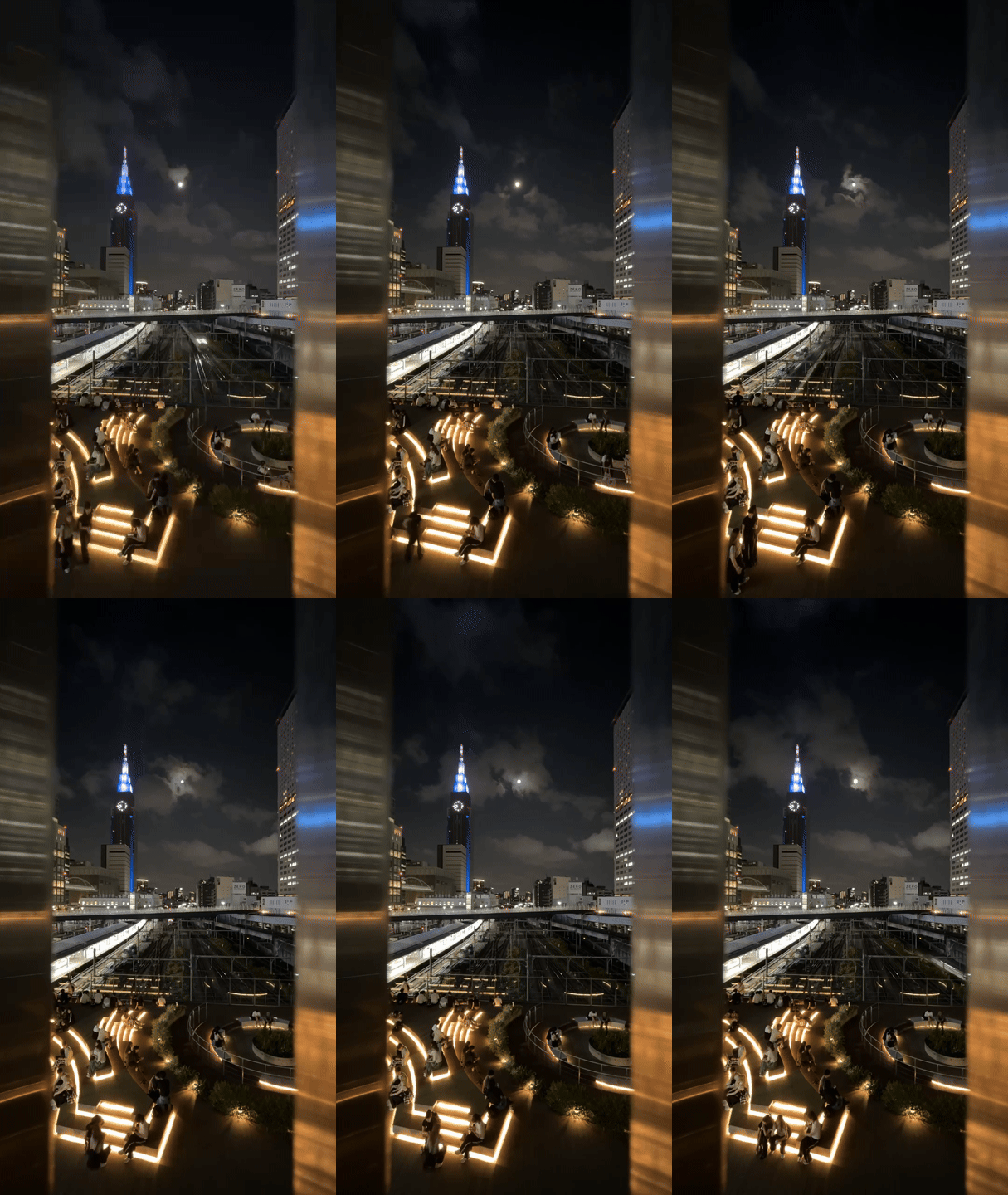
Shinjuku Station South Terrace Seating
A public wooden bench seating and open plaza area above the JR train tracks, between the Takashiyama Building and the other side with Starbucks overlooking the tracks. It forms a kind of valley condition in the city, where some curving wooden auditorium style seating, planting, and nice lighting conditions take place. It is ‘oshare,’ but the space management is probably JR, or the other railway companies, leaving it seemingly without site management except for security. It is essentially part of the train station, but the space is wide open, and an overhang protects the inner area from rain.
The people who are often there are young- students after class, maybe from outer areas of the Tokyo region, but they are gathered in large groups or smaller clusters, sitting in circles on the ground, or sitting properly on the benches. The space is able to house hundreds of people.
What I find exciting about this space is the immense informal gathering, and the lack of formal behavior. “Tattemae” drops off and people can be their true selves, “honnmae.” This is especially rare in public spaces in Tokyo, because it feels like in every commercial public space, you need to put on a mask, and still obey the silent rules of social behavior. You cannot talk with strangers in curated public spaces, even public parks. However it seems like a large enough crowd of young people have gathered improperly, and the behavioral flock-like trend of this space is leaning towards the informal- A place where young people can be themselves, and a place where no ojisans or obasans are going to look at them funny for doing what they “shouldn’t” be doing.
![]()
Mishima Future Research Institute (Community Center)
みしま未来研究所
A kindergarten in Mishima, located in Shizuoka prefecture was converted into a semi-modern community center for the town. The plan has a C shaped configuration, with the open courtyard facing the public street. Each part of the C shape has a distinct program housed within, creating 3 parts. A bar, or social space in the middle, flanked by a workshop/open classroom/studio space on one side that can be used for various public functions, like community art. A private organization can rent out the space for a day and host an event, so the programs are rotating quite often.
We did not see it, but apparently there is a co-working space, conference rooms, and high school club room on the other side of the C shape.
In the middle is a large circular grass lawn, with moveble DIY art-style organic colored wooden boards that can be used to sit on, or eat on. The concept of these art-style seating modules was playful and offered more formal invitation to use the unmarked public space as informal seating.
It was at the beginning of Obon Week, and yet there were very few people within the space.. Although I can imagine in the evenings it becomes a bit more lively. It seems as though the people of Mishima are probably not as keen on design, or this kind of innovative use of existing space, however the few people there were trying to work within the bar.
The drinks were expensive, as craft bars usually are for Japanese salaries. And the staff was not particularly open or welcoming, but rather cold. This probably comes from having to work at a repurposed school, and maybe the budget of the company involved with the beer business. I don’t know-
So in a way, management itself just existing within the space turns people off- They do not want to be judged or greeted, or seen for how long they exist within a space. The design and finishes of the repurposed school is nice, but not flashy. It seems reasonable, however the atmosphere is still pretentious. The idea of making high-end, and “craftbrew” something that is not, and putting a 700yen minimum price tag on beer is not exactly what I would consider, “youth friendly.”
But the concept design of the architecture, and the public space that is formed is a success in my opinion, but the taste of the private management, maybe not so much. And any kind of management or hospitality visible, is not inviting for real public space. Perhaps they need to be put in the corner, and allow people to flow freely in, or out without buying anything.
Conversely what I can see being successful, is allowing people to bring their own beer, and sell food, while the middle courtyard area becomes an informal gathering space where people can exist without being judged for their lack of commercial expenditure. Because the moment you put a price tag on that public space, people immediately think that in order to exist within the space, they have to spend money. Which leads people to always think fondly of the space, but ultimately avoiding it. It exists as a sacred place, saved on Google Maps that one would refer to others, but never go to.
![]()
Noborito Waterfront
On the opposite side of the bustling city center of Tokyo, exists a spacious river, the Tamagawa. Locals would call it the Tamazon, for the wide flood planes that cause lush vegetation that stretch much wider than the actual river itself. And because of the flood planes that frequenty flood during heavy rains or monsoons, there are very few buildings adjacent immediately to the river. At the stretch off the Odakyu line, on the Kawasaki side, is Kawanoba- an area with informal barbecue gatherings, athletic events for kids, pop-up thrift markets, and a flat concrete area for skateboarding.
What makes this area special is the wide openness, and the lack of curated commercial spaces. You can find people drinking canned beers and having yakitori in the summer months along the riverbank. Kawasaki, having a historic reputation for being blue-collar, a kind of mining or manufacturing outer ward exhibits a laid back attitude and an appropriate lack of fashion. It is said that you can walk outside of your house in sweatpants and nobody would judge you.
The site itself cannot house buildings, at least flood prone ones. So the only building that exists is a little blue shack that was formerly an oden restaurant with some boat storage inside.
I think the site captures a raw Tokyo, that is on the edges of the vast metropolis.
A public wooden bench seating and open plaza area above the JR train tracks, between the Takashiyama Building and the other side with Starbucks overlooking the tracks. It forms a kind of valley condition in the city, where some curving wooden auditorium style seating, planting, and nice lighting conditions take place. It is ‘oshare,’ but the space management is probably JR, or the other railway companies, leaving it seemingly without site management except for security. It is essentially part of the train station, but the space is wide open, and an overhang protects the inner area from rain.
The people who are often there are young- students after class, maybe from outer areas of the Tokyo region, but they are gathered in large groups or smaller clusters, sitting in circles on the ground, or sitting properly on the benches. The space is able to house hundreds of people.
What I find exciting about this space is the immense informal gathering, and the lack of formal behavior. “Tattemae” drops off and people can be their true selves, “honnmae.” This is especially rare in public spaces in Tokyo, because it feels like in every commercial public space, you need to put on a mask, and still obey the silent rules of social behavior. You cannot talk with strangers in curated public spaces, even public parks. However it seems like a large enough crowd of young people have gathered improperly, and the behavioral flock-like trend of this space is leaning towards the informal- A place where young people can be themselves, and a place where no ojisans or obasans are going to look at them funny for doing what they “shouldn’t” be doing.
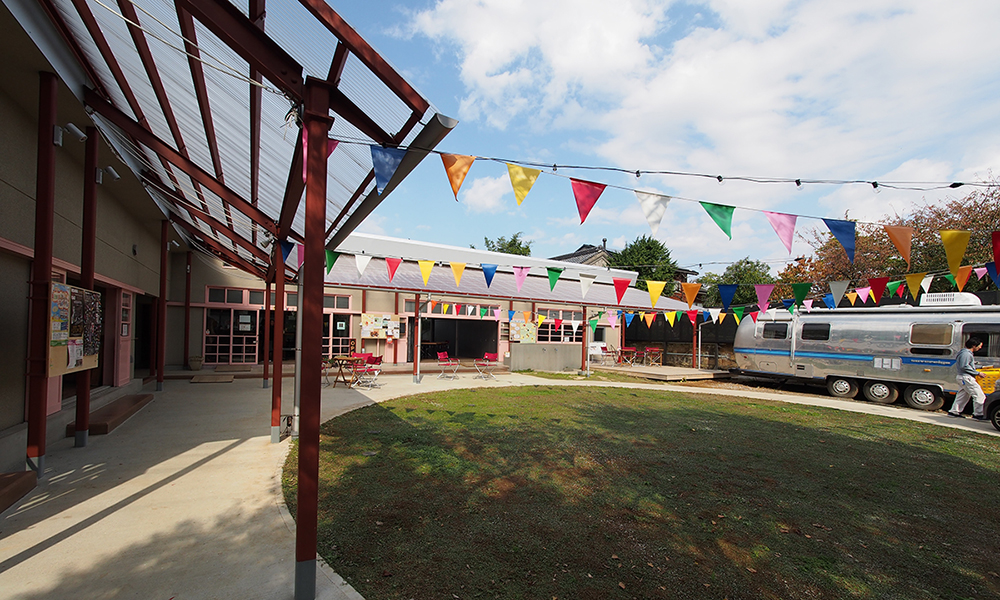
Mishima Future Research Institute (Community Center)
みしま未来研究所
A kindergarten in Mishima, located in Shizuoka prefecture was converted into a semi-modern community center for the town. The plan has a C shaped configuration, with the open courtyard facing the public street. Each part of the C shape has a distinct program housed within, creating 3 parts. A bar, or social space in the middle, flanked by a workshop/open classroom/studio space on one side that can be used for various public functions, like community art. A private organization can rent out the space for a day and host an event, so the programs are rotating quite often.
We did not see it, but apparently there is a co-working space, conference rooms, and high school club room on the other side of the C shape.
In the middle is a large circular grass lawn, with moveble DIY art-style organic colored wooden boards that can be used to sit on, or eat on. The concept of these art-style seating modules was playful and offered more formal invitation to use the unmarked public space as informal seating.
It was at the beginning of Obon Week, and yet there were very few people within the space.. Although I can imagine in the evenings it becomes a bit more lively. It seems as though the people of Mishima are probably not as keen on design, or this kind of innovative use of existing space, however the few people there were trying to work within the bar.
The drinks were expensive, as craft bars usually are for Japanese salaries. And the staff was not particularly open or welcoming, but rather cold. This probably comes from having to work at a repurposed school, and maybe the budget of the company involved with the beer business. I don’t know-
So in a way, management itself just existing within the space turns people off- They do not want to be judged or greeted, or seen for how long they exist within a space. The design and finishes of the repurposed school is nice, but not flashy. It seems reasonable, however the atmosphere is still pretentious. The idea of making high-end, and “craftbrew” something that is not, and putting a 700yen minimum price tag on beer is not exactly what I would consider, “youth friendly.”
But the concept design of the architecture, and the public space that is formed is a success in my opinion, but the taste of the private management, maybe not so much. And any kind of management or hospitality visible, is not inviting for real public space. Perhaps they need to be put in the corner, and allow people to flow freely in, or out without buying anything.
Conversely what I can see being successful, is allowing people to bring their own beer, and sell food, while the middle courtyard area becomes an informal gathering space where people can exist without being judged for their lack of commercial expenditure. Because the moment you put a price tag on that public space, people immediately think that in order to exist within the space, they have to spend money. Which leads people to always think fondly of the space, but ultimately avoiding it. It exists as a sacred place, saved on Google Maps that one would refer to others, but never go to.
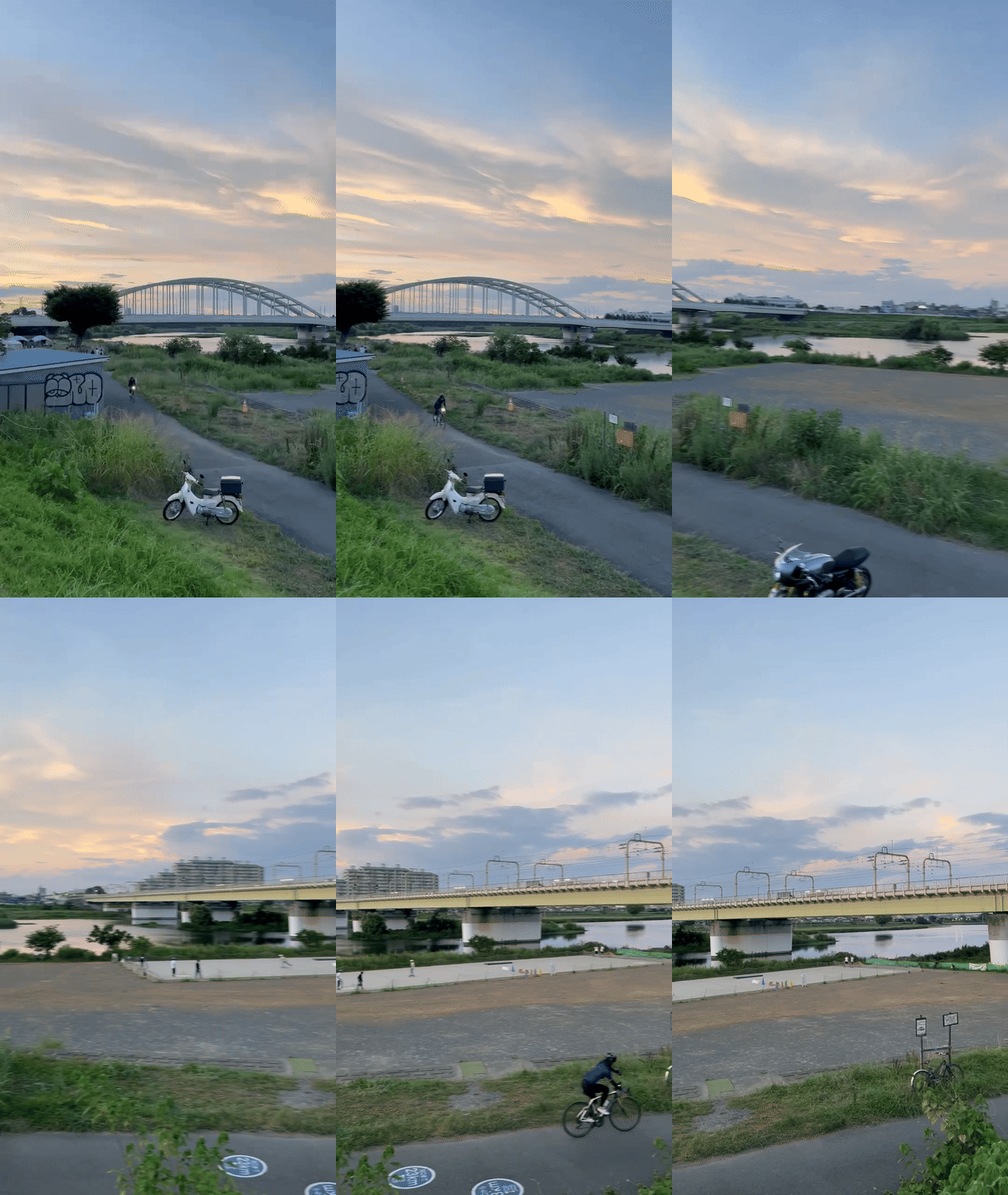
Noborito Waterfront
On the opposite side of the bustling city center of Tokyo, exists a spacious river, the Tamagawa. Locals would call it the Tamazon, for the wide flood planes that cause lush vegetation that stretch much wider than the actual river itself. And because of the flood planes that frequenty flood during heavy rains or monsoons, there are very few buildings adjacent immediately to the river. At the stretch off the Odakyu line, on the Kawasaki side, is Kawanoba- an area with informal barbecue gatherings, athletic events for kids, pop-up thrift markets, and a flat concrete area for skateboarding.
What makes this area special is the wide openness, and the lack of curated commercial spaces. You can find people drinking canned beers and having yakitori in the summer months along the riverbank. Kawasaki, having a historic reputation for being blue-collar, a kind of mining or manufacturing outer ward exhibits a laid back attitude and an appropriate lack of fashion. It is said that you can walk outside of your house in sweatpants and nobody would judge you.
The site itself cannot house buildings, at least flood prone ones. So the only building that exists is a little blue shack that was formerly an oden restaurant with some boat storage inside.
I think the site captures a raw Tokyo, that is on the edges of the vast metropolis.